Allergy-Friendly Log Home Living in Japan【Ep.1】
Indoor Air Quality and Pollen Control in a Wooden Home
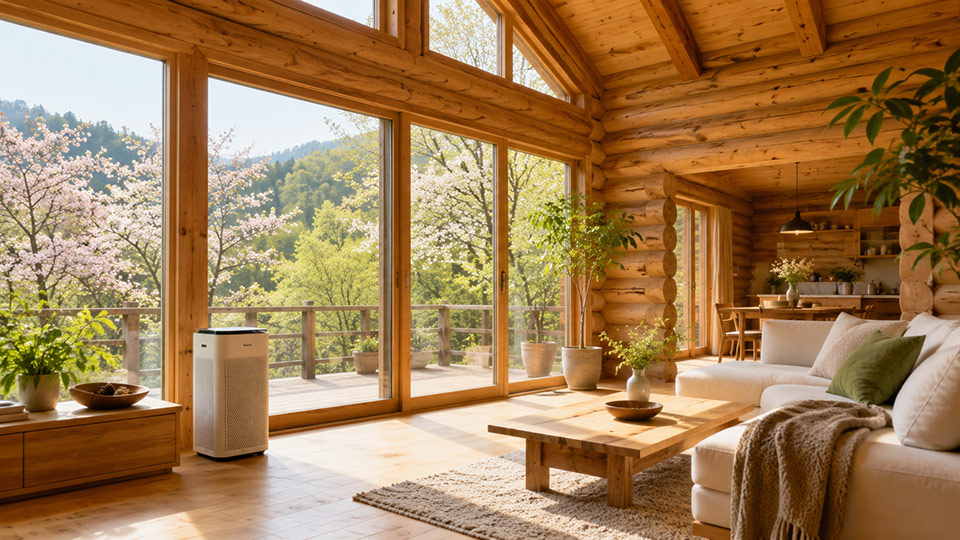
When people think of a log home, they often imagine a house surrounded by nature: a living room filled with the scent of wood, a warm wood stove, a garden or mountain view outside the window, and a slower, more peaceful lifestyle.
Log homes offer a kind of comfort that is difficult to find in ordinary houses or city apartments.
However, living close to nature also means living with the realities of the natural environment. In Japan, this includes cedar and cypress pollen in spring, ragweed and mugwort pollen in autumn, mold during the rainy season, condensation in winter, house dust, insects, humidity, and in some cases, concerns related to indoor chemical exposure or sick house syndrome.
So, are log homes unsuitable for people with hay fever or allergies?
Not necessarily.
A log home uses a large amount of natural wood, and when it is properly designed, ventilated, cleaned, and maintained, it can become a comfortable home with good indoor air quality. However, it is also important not to assume that “because it is made of wood, it must automatically be healthy.”
To create an allergy-friendly log home, both the design stage and daily maintenance after moving in are important.
The Basics of Pollen Control: Keep It Out, Remove It, and Prevent It from Spreading
When people think of pollen control, they often think of wearing a mask or taking allergy medicine when going outside. However, pollen that enters the home can also cause sneezing, nasal congestion, itchy eyes, and other symptoms indoors.
The basic approach to pollen control is the same for log homes and ordinary homes.
First, prevent pollen from entering the home as much as possible. Second, remove pollen that does enter. Third, prevent pollen that has settled on floors, furniture, or fabric from being stirred back into the air.
Pollen can enter through windows and ventilation openings, but it also comes in on clothing, hair, bags, pets, and laundry. For this reason, the entrance area and the way people move through the home after coming inside are surprisingly important.
For example, it helps to have a place near the entrance to hang coats and outerwear. Clothes worn outside should not be brought directly into the living room. Storage near the entrance, a mudroom, or even a wash area close to the entry can help reduce the amount of pollen brought into the main living space.
Ventilation is still necessary during pollen season. However, opening large windows for long periods can bring pollen inside. It is better to think carefully about when and how to ventilate, and to use air purifiers or filters to reduce the amount of pollen circulating indoors.
Entryways, Decks, and Laundry Flow Matter in a Log Home
One of the great appeals of a log home is its close connection to the outdoors. Decks, gardens, porches, and outdoor living spaces are part of the lifestyle.
However, from the perspective of pollen control, this close relationship between inside and outside can also become a pathway for pollen to enter the home.
In spring, spending time on the deck, gardening, carrying firewood, or walking through wooded areas can easily bring pollen onto clothing and shoes. If you then walk straight into the living room, pollen is carried indoors.
That is why the entrance area is especially important in an allergy-conscious log home.
Ideally, shoes, outdoor jackets, hats, gardening tools, pet items, firewood gloves, and other outdoor items should not be brought deep into the home. A proper entrance storage area, mudroom, or dirt-floor-style entry space can be very helpful.
This is especially true for vacation homes or countryside living in Japan, where boots, outdoor gear, garden tools, and firewood-related items tend to accumulate. If the entrance is too small, pollen, dust, and soil can more easily spread into the living area.
Laundry planning is also important.
If clothes and towels are dried outside during pollen season, pollen can attach to them. When planning a log home, it is useful to consider an indoor drying space, laundry room, or dryer location. This can make life much easier during spring pollen season.
Even Wooden Homes Need House Dust Control
The warmth of natural wood is one of the biggest attractions of a log home. However, a wooden home does not automatically eliminate house dust.
House dust can include dust, mites, pollen, mold spores, textile fibers, pet hair, and other allergens. Fabric sofas, carpets, rugs, bedding, and curtains can easily collect allergens.
One advantage of a log home is that wooden floors and timber walls can make the home easier to clean. Instead of installing carpet across large areas, it is often easier to maintain a clean indoor environment by using wooden floors and washable rugs only where needed.
However, log homes often have open ceilings, large beams, high windows, and ceiling fans. These features are beautiful, but dust can accumulate on high surfaces that are difficult to reach.
For this reason, it is important to design a home that is easy to clean.
How will high windows be cleaned? How will dust be removed from beams or lighting fixtures? Where should air purifiers be placed? Where will vacuum cleaners and cleaning tools be stored?
Thinking about these details during the design stage can make the home much easier to live in after completion.
Summary of Ep. 1
Living in a log home during pollen season means enjoying nature while also taking steps to keep pollen out of the indoor environment.
The key is not only window control and ventilation, but also entrance planning, deck access, laundry flow, storage, and ease of cleaning.
Because log homes are closely connected to the outdoors, the way the boundary between outside and inside is designed can greatly affect comfort.
In Ep. 2, we will look at indoor air quality beyond pollen, including sick house syndrome, mold, humidity, condensation, and ventilation planning.









