What Makes a Log Home Easy or Difficult to Sell?【Ep.2】
Resale Value from the Perspective of Insulation Performance, Legal Conditions, and Future Buyers
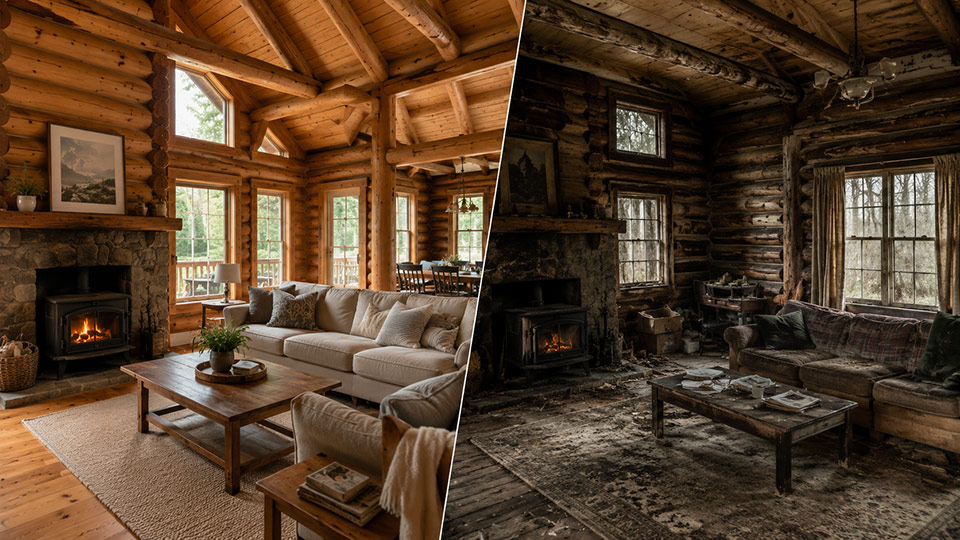
In Ep. 1, we discussed the key features that make a log home easier to sell, including location, practical floor plans, maintenance condition, and how easily buyers can imagine using the property after purchase.
In Ep. 2, we will look at this topic from a more practical perspective: insulation performance, building approval, land conditions, repair history, and the importance of information that gives buyers confidence.
Log Homes with Good Insulation Performance Are Easier to Sell
When building a log home in Japan, insulation performance is becoming increasingly important.
In the past, log homes were sometimes discussed simply with the idea that “thick wood must feel warm.” However, today’s housing market requires more specific energy-efficiency and insulation performance.
This is especially important because, from 2025 onward, newly built homes in Japan are required to comply with energy-efficiency standards. In addition, Japan is moving toward even higher energy-performance requirements by 2030.
In this environment, log homes with poor insulation performance may become more difficult to sell in the future.
For example, buyers may be concerned if the home is:
- Cold in winter
- Hot in summer
- Expensive to heat and cool
- Prone to condensation
- Cold around the windows
- Weak in roof or floor insulation
If these issues are present, buyers may worry about how comfortable the home will be after purchase.
On the other hand, a log home that has been carefully planned in terms of log thickness, roof insulation, floor insulation, foundation insulation, window performance, entrance doors, ventilation, and heating and cooling systems is more likely to be valued in the future.
A log home should not only look like a log home. It also needs to perform properly as a house.
This will become one of the important conditions for log homes that are easier to sell.
Legally Compliant Log Homes Are Easier to Sell
When selling a property, the legal condition of the building and land is extremely important.
No matter how attractive a log home may be, it can be difficult to sell if the proper building approval process was not followed, if extensions are unregistered, or if there are issues with road access.
In Japan, land generally needs to properly connect to a road recognized under the Building Standards Act in order to build a house. Depending on the location, many other conditions may also need to be checked, including urban planning areas, zoning, building coverage ratio, floor area ratio, height restrictions, setback and sunlight regulations, fire prevention rules, landscape ordinances, the Natural Parks Act, and landslide hazard zones.
Because log homes are often built in natural settings, they may be subject to regulations that differ from those in ordinary residential neighborhoods.
An easy-to-sell log home is one where these conditions are clearly organized.
For example:
- The building confirmation certificate is available
- The final inspection certificate is available
- The registered information matches the actual building
- The history of extensions or renovations is clear
- Land boundaries are clearly defined
- There are no major road access issues
- The status of water, sewage, or septic systems is understood
When this information is in order, buyers, real estate agents, and financial institutions can evaluate the property more easily.
By contrast, if important documents are missing or there are concerns about the legality of the building, buyers may have difficulty obtaining a housing loan. This can significantly reduce the number of potential buyers.
Common Features of Hard-to-Sell Log Homes
So, what kinds of log homes are more difficult to sell?
The first is a poorly maintained log home.
If the exterior stain has deteriorated, the wood has visible damage, or the deck and exterior stairs are unsafe, buyers will assume that major repairs may be required.
The second is a log home in a location that is too inconvenient.
Even if the natural environment is beautiful, buyers may be limited if the road is too narrow, the property cannot be accessed by car in winter, shops and hospitals are too far away, or the property is difficult to manage.
Another example is a log home with an overly unique floor plan.
A design that is too strongly tailored to the original owner’s personal preferences may be difficult for the next buyer to use comfortably.
Low insulation performance is also a concern.
As awareness of housing performance continues to grow in Japan, homes that “look nice but feel cold” are likely to be evaluated less favorably.
The biggest issue, however, is a log home with unclear legal conditions or missing documents.
If the status of building approval, final inspection, registration, road access, land boundaries, or building services is unclear, the property will look risky to buyers.
If You May Sell in the Future, Prepare Before You Build
When building a log home, many people naturally focus on how they want to live in it.
Of course, that is very important.
However, if there is even a small possibility of selling the property in the future, it is also important to think from the perspective of the next buyer before construction begins.
For example, you should consider:
- Is the area likely to remain attractive in the future?
- Are there any problems with road access or infrastructure?
- Is the floor plan suitable for longer stays?
- Is the insulation performance sufficient?
- Is the design easy to maintain?
- Can building approval and final inspection documents be properly kept?
- Can repair and maintenance records be preserved?
These are things that can become expensive to fix after the home has already been built.
That is why they should be considered from the earliest planning stage.
A log home can retain its value for a long time if it is properly designed and maintained. However, if the design, land selection, or maintenance approach is wrong, it may become much harder to find a buyer when the time comes to sell.
Conclusion: Easy-to-Sell Log Homes Combine Appeal and Reassurance
An easy-to-sell log home is not simply a good-looking log home.
- It has the appeal of natural materials
- It has the atmosphere people expect from a log home
- It is in a good location
- It has a practical floor plan
- It offers proper insulation performance
- It has been well maintained
- Its legal conditions are clearly organized
- Buyers can easily imagine life after purchase
In other words, it needs to combine two things: the emotional appeal that makes buyers want the home, and the practical reassurance that allows them to purchase it with confidence.
On the other hand, a hard-to-sell log home may still have charm, but it often comes with too many concerns.
- It may look cold
- It may look damaged
- It may seem expensive to repair
- It may feel difficult to use
- Its documents may be unclear
- It may look hard to manage
When buyers sense these risks, they naturally become more cautious.
If you are planning to build a log home in Japan, it is important to think not only about how satisfied you will be when the home is completed, but also about its value 10 or 20 years from now.
An easy-to-sell log home is one that continues to be loved and chosen by the next owner.
To achieve this, the planning process needs to consider design, performance, land conditions, maintenance, and legal reassurance as one complete package.









