Why Are Log Cabins with Saunas So Popular?【Ep.2】
How to Build a Sauna Log Cabin That Turns Popularity into Both Satisfaction and Profit.
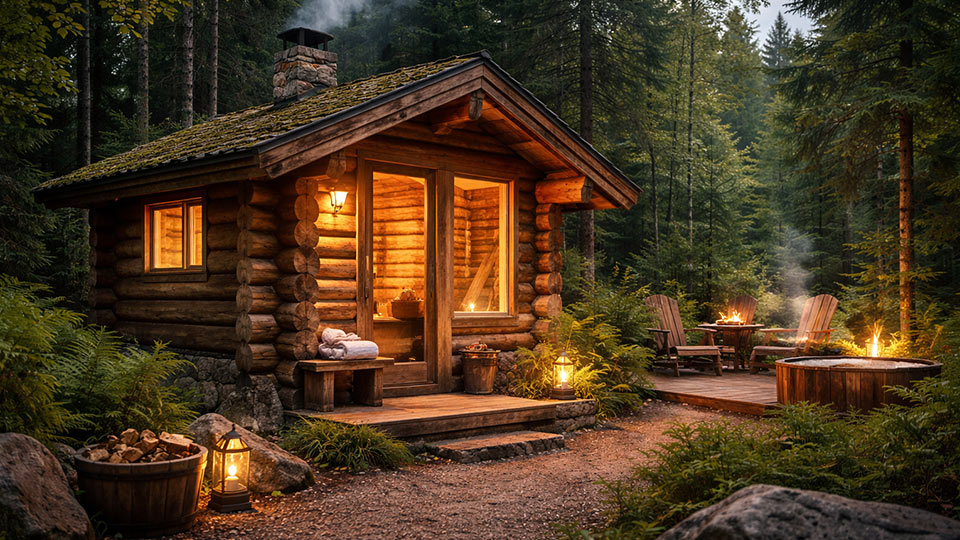
While sauna log cabins are gaining popularity, the difference in guest satisfaction is not determined by “sauna-room performance” alone. In reality, what separates a great experience from an average one is how temperature and humidity are created, the quality of the cold plunge and outdoor cooling, and—most importantly—the overall circulation and layout. Below is a clear overview of common specifications that tend to be chosen and the mindset needed to avoid costly mistakes.
Outdoor (detached) sauna vs. indoor (main-house) sauna
The two most common options are an outdoor sauna in a separate building and an indoor sauna built inside the main cabin.
A detached sauna delivers a stronger sense of escape and pairs especially well with a wood-burning stove. The aroma of firewood and the flicker of flames elevate the experience to another level. An indoor sauna, on the other hand, is easier to access in winter and better suited to everyday use.
In terms of popularity trends, vacation rentals and lodging facilities often favor detached saunas because of their photogenic appeal and special atmosphere, while residential use tends to value the convenience of an indoor sauna.
Heat source: electric vs. wood-burning
Next is the heat source.
Electric saunas are easy to control and reduce operational burden. For lodging facilities, the biggest advantage is that anyone can use them reliably without “getting it wrong.”
Wood-burning saunas offer a higher experiential value, but they also add operational requirements: handling fire safely, storing fuel, cleaning the chimney, and more.
If you want maximum appeal, wood-burning is powerful. But if you cannot build a solid operating system, an electric sauna with a highly refined comfort level usually produces more stable reviews. The best answer is to choose based on your target guests and the operator’s skill and staffing.
The most important factor: the “reset flow” (circulation design)
The key is a circulation route that makes it easy to “get in the zone.” Ideally, guests can move sauna → shower → cold plunge → outdoor cooling → indoor rest smoothly, safely, and without hesitation.
Log cabins have a major advantage here: wood decks and covered eaves are perfect for outdoor cooling. The most popular facilities typically have outdoor cooling areas designed with comfort and control in mind—comfortable chairs, footrests, thoughtful lighting, privacy screens, and layouts that manage wind and sightlines.
Common failure patterns include “experience noise” such as: a long or confusing route, slippery floors, weak cold-weather measures, harsh lighting, or outdoor cooling areas exposed to neighbors and lacking privacy.
Log-cabin-specific considerations: moisture control and ventilation
One crucial log-cabin-specific point is humidity management and ventilation planning. Saunas generate large amounts of steam, so you must clarify the building strategy for insulation, airtightness, and vapor control—and eliminate risks such as condensation and mold.
For indoor saunas, it’s essential to design airflow not only for the sauna room exhaust, but also for the entire zone: changing area, washbasin space, and rest area. People often say wooden houses “breathe,” but modern high-performance homes require planned ventilation as a basic assumption. Success comes from thinking in terms of the building’s overall balance, not leaving everything to mechanical equipment alone.
Turning popularity into revenue: design the sauna as the core of the stay
If your goal is to translate popularity into profit, treat the sauna not as a standalone amenity, but as the centerpiece of your stay content. That means building a story around what guests enjoy before and after the sauna—fire pits, wood stoves, fireplaces, starry skies, snowy views, river and forest scenery, a hot/cold contrast bathing route, local-ingredient BBQ, morning coffee with deck chairs.
When these elements come together, your property competes on experience value, not price. That makes it easier to raise rates and smooth out seasonal fluctuations in occupancy.
The essence of the trend
The true appeal of sauna log cabins is the recovery experience created by wood, heat, and nature. That’s why the best projects are designed holistically—performance, safety, operations, circulation, and scenery—removing “noise” and leaving a lingering sense of calm.
A sauna log cabin built this way becomes a place people want to return to—whether for living or lodging. And its popularity won’t be temporary; it accumulates as long-term asset value.









