Can Foreigners Buy Land in Japan?

A Complete Guide to Buying Property and Building a House in Japan
Japan has become one of the most attractive destinations for international buyers looking to purchase land and build vacation homes. Popular areas such as Niseko, Hakuba, Furano, and Karuizawa have seen a growing number of foreign investors interested in building ski chalets, vacation homes, and log cabins.
A common question many people ask is:
“Can foreigners buy land in Japan?”
The short answer is yes. Japan is one of the few countries in the world where foreigners can purchase land with almost no restrictions.
However, there are several important things international buyers should understand before purchasing property and building a house in Japan.
1. Are Foreigners Allowed to Buy Land in Japan?
Yes. Foreigners can freely buy land and property in Japan.
Unlike many countries, Japan does not restrict real estate ownership based on nationality.
This means:
- Non-residents can buy land
- Foreign individuals can own property
- Foreign companies can own land
- There is no requirement to have Japanese citizenship
You also do not need a visa to purchase property in Japan.
However, owning property does not automatically grant residency or a visa.
2. Can Foreigners Build a House in Japan?
Yes. Once you purchase land, you can build a house or log cabin in Japan.
However, construction must comply with Japanese building laws.
In Japan, houses must be designed and approved by a licensed Japanese architect before construction begins.
This process is called the Building Confirmation Application (建築確認申請).
Without this approval, construction cannot start.
3. Important Land Checks Before Buying Property
One of the biggest mistakes foreign buyers make is purchasing land without confirming building regulations.
In Japan, each plot of land is subject to zoning rules and building restrictions.
Important items to check include:
Zoning
Determines what type of buildings can be constructed.
Building Coverage Ratio (BCR)
The percentage of land that can be covered by a building.
Floor Area Ratio (FAR)
The maximum total floor area allowed.
Road Access
Most residential buildings must be connected to a legal road.
Local Regulations
Resort areas sometimes have special development rules.
For example, some plots may allow existing houses to remain but do not allow new construction.
Because of this, it is essential to check regulations before purchasing land.
4. The Process of Building a House in Japan
Once land is purchased, the process of building a home generally follows these steps.
Step 1 – Site Investigation
Architects examine the land conditions, including:
- Soil condition
- Land slope
- Access to utilities
Step 2 – Architectural Design
The architect prepares:
- Floor plans
- Structural calculations
- Compliance with building codes
Step 3 – Building Confirmation Application
The design is submitted to local authorities for approval.
Approval typically takes 3–6 weeks.
Step 4 – Construction
Once approval is granted, construction can begin.
Typical construction periods:
| House type | Construction time |
|---|---|
| Standard wood house | 4–6 months |
| Custom home | 6–10 months |
| Log cabin | 5–8 months |
Step 5 – Completion Inspection
After construction, a final inspection confirms the building complies with regulations.
5. Cost of Building a House in Japan
Construction costs vary depending on location and design.
Typical building costs in Japan:
| Type of home | Cost per m² |
|---|---|
| Standard wood house | ¥300,000 – ¥420,000 |
| Custom house | ¥420,000 – ¥600,000 |
| Log home | ¥480,000 – ¥780,000 |
For example, a 100 m² log cabin may cost:
¥48,000,000 – ¥78,000,000
excluding land.
6. Infrastructure Costs to Consider
In many rural or resort areas, additional infrastructure is required.
Common additional costs include:
| Infrastructure | Typical cost |
|---|---|
| A. Septic system | ¥1,44,000 – ¥3,000,000 |
| B. Well drilling | ¥1,500,000 – ¥4,200,000 |
| C. Electric connection | ¥360,000 – ¥1,800,000 |
| D. Land preparation | ¥1,200,000 – ¥6,000,000 |
These costs are often overlooked by foreign buyers.
A. Septic System
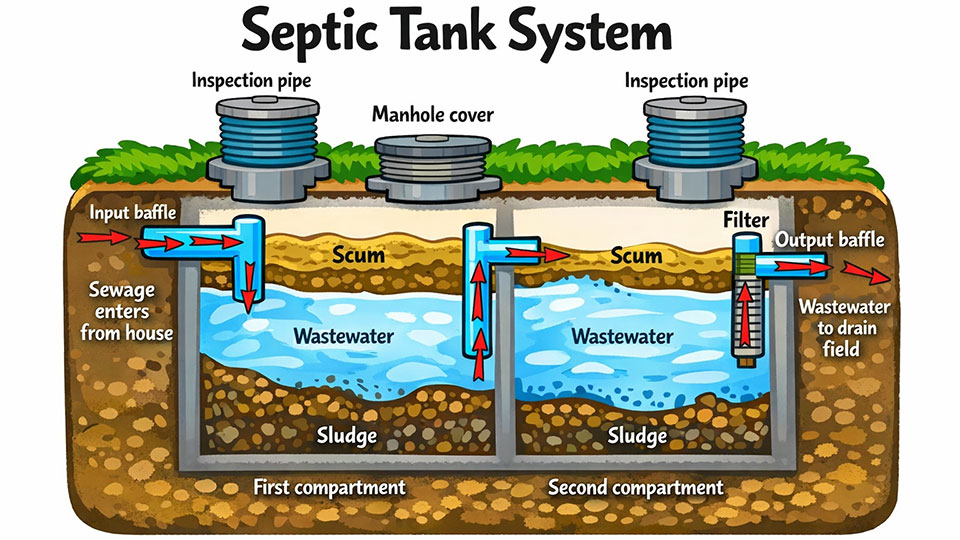
Typical Cost Range:
¥1,440,000 – ¥3,000,000
Example Cost Breakdown
| Item | Estimated Cost |
|---|---|
| Septic tank unit | ¥480,000 – ¥960,000 |
| Installation work | ¥360,000 – ¥840,000 |
| Plumbing | ¥120,000 – ¥360,000 |
| Infiltration pit / drainage trench | ¥240,000 – ¥960,000 |
Explanation
In many rural areas of Japan, public sewer systems are not available. For this reason, houses typically require the installation of a combined septic system (Gappei Jokaso) to treat household wastewater.
The total cost can vary significantly depending on site conditions. Prices tend to increase in cases such as:
- Forest or mountain sites where excavation is more complex
- Clay-heavy soil conditions where drainage is slower
- Long infiltration distances required for proper wastewater absorption
These factors can affect both the scale of the drainage system and the amount of excavation required, which is why the final cost range can vary.
B. Well Drilling
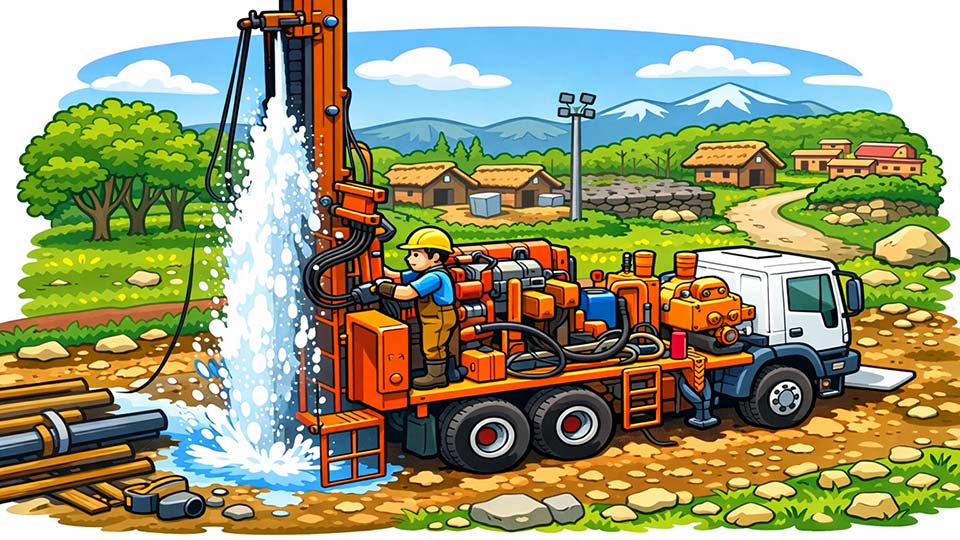
Typical Cost Range:
¥1,440,000 – ¥4,200,000
In rural areas and resort regions of Japan, municipal water systems may not be available, which is why many houses rely on private wells for their water supply.
Example Cost Breakdown
| Item | Estimated Cost |
|---|---|
| Drilling | ¥960,000 – ¥2,400,000 |
| Water pump | ¥240,000 – ¥720,000 |
| Plumbing | ¥120,000 – ¥480,000 |
Explanation
The cost of drilling a well can vary significantly depending on the depth required to reach groundwater. Deeper wells require more drilling time, specialized equipment, and additional materials, which increases the overall cost.
Typical examples include:
- 30 m depth → approximately ¥1,000,000
- 60 m depth → approximately ¥1,500,000
- 100 m depth → approximately ¥2,500,000
In many resort areas in Hokkaido, where groundwater is often deeper, well installation costs are commonly around ¥2,000,000 or more depending on site conditions.
C. Electric Connection
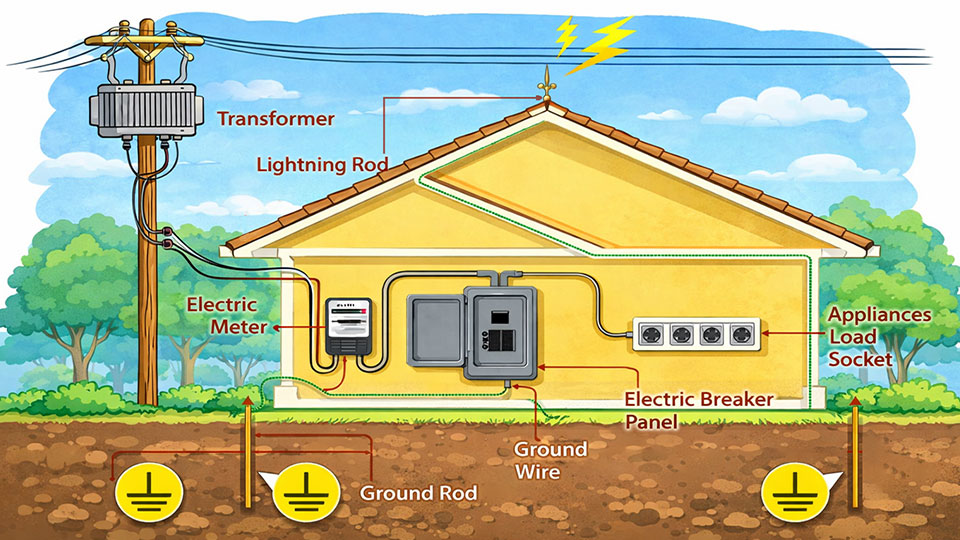
Typical Cost Range:
¥360,000 – ¥1,800,000
Example Cost Breakdown
| Item | Estimated Cost |
|---|---|
| Utility pole connection | ¥120,000 – ¥600,000 |
| Electrical wiring | ¥240,000 – ¥960,000 |
| Transformer or additional equipment | Depending on site conditions |
Explanation
The cost of connecting electricity to a property in Japan can vary depending on several factors, including:
- The distance to the nearest utility pole
- Whether a new utility pole must be installed
- Whether the property is located in a remote or forested area
If the nearest utility pole is far from the construction site, additional work may be required to extend the electrical line. In such cases, the total cost can reach ¥1,200,000 – ¥1,800,000 or more.
This is particularly common in rural or resort areas where infrastructure is limited.
D. Land Preparation (Site Development)
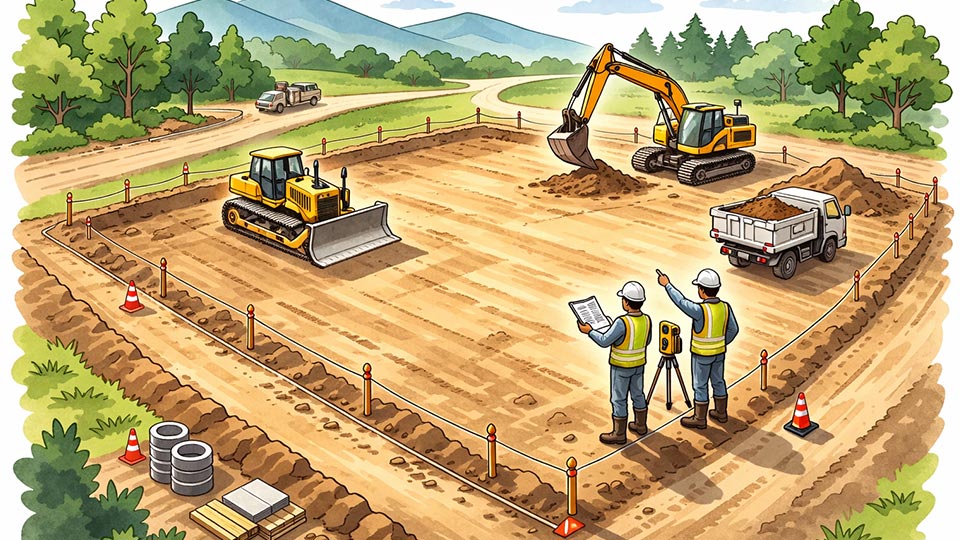
Typical Cost Range:
¥1,200,000 – ¥6,000,000
Example Cost Breakdown
| Item | Estimated Cost |
|---|---|
| Tree clearing | ¥360,000 – ¥1,200,000 |
| Land grading / leveling | ¥600,000 – ¥1,800,000 |
| Retaining walls | ¥1,200,000 – ¥3,600,000 |
Explanation
Land preparation costs can vary significantly depending on the topography and condition of the land.
For example:
- Flat land: approximately ¥600,000 – ¥1,200,000
- Moderate slope: approximately ¥1,800,000 – ¥3,600,000
- Steep slopes or retaining walls required: ¥3,600,000 – ¥9,600,000
In resort areas such as Niseko, many plots are located on sloped terrain or forested land. Because of this, a budget of ¥2,000,000 is often not sufficient for full site preparation.
Proper site development may include tree removal, excavation, soil stabilization, and retaining wall construction.
7. Why Many Foreign Buyers Choose Log Homes in Japan
Log homes are particularly popular among international buyers because they offer:
- Natural wood aesthetics
- Excellent insulation (Except Laminated log homes)
- Strong durability
- Unique architecture
In resort areas like Niseko, log cabins are often used as:
- Vacation homes
- Ski chalets
- Airbnb rental properties
Final Thoughts
Japan is one of the most accessible countries in the world for foreigners who want to buy land and build a house.
However, understanding the local regulations and working with experienced architects and builders is essential.
With proper planning, building a home or log cabin in Japan can become a rewarding long-term investment and a place to enjoy nature for many generations.
If you are considering building a log house or custom home in Japan, feel free to contact us for more information.









